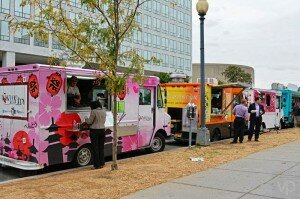
 One of the greatest things about DC that is almost universally loved by everyone who lives here is the DC Food Trucks. Everyone knows about them! When tourists come in they see all of the hotdog and egg roll trucks down by the mall. Unfortunately they generally don’t see any of the awesome selection of trucks that frequent McPherson Square and some of the other areas. You can literally get just about any type of food from anywhere in the world right out of a truck. Even Chick-Fil-A has a truck that travels all across the city.
Long story short, everyone loves the food trucks in DC, but even the town’s universal love for them doesn’t stop the city government from trying to make them harder to operate.
Do you remember a few years ago how cheap it was to eat at food trucks? You could really get some sweet deals. After all, this only makes sense. How much overhead can there actually be in a tiny little truck? They don’t have to pay for a building or property taxes. They don’t have any servers, so their labor costs are pretty low. But recently the cost to eat at a food truck has gone through the roof, and it’s basically no cheaper than going to a regular restaurant.
Increasingly the cost to operate and run a food truck in DC is rising. There are strict health regulations that operators must follow and there are tons and tons of fees involved with getting licenses. There are also special food truck taxes that you must pay as a consumer each and every transaction you make at a food truck.
Worse yet, many brick and mortar restaurants don’t like the competition that the local food truck bring to them and they are trying to squeeze them out of operations. This is one of the biggest problems and where anti-food truck people seem to have been gaining the most ground. Brick and mortar restaurants would rather see the food trucks go away because they have less businesses to compete with then, so they go to local governments and complain that food trucks don’t “play by the rules,” because they have low overhead and aren’t traditional restaurants. Some cities have ordinances on the books now that say food truck must be a certain number of feet away from any brick and mortar restaurant, thusly limiting competition nearby. Thankfully DC hasn’t done something this silly yet, but neighboring cities in Virginia have.
This is yet another example of how we can use social media to our advantage. If we start talking to our local councilman about the problems that this presents for our city, they will probably listen to us. If we go to all of the various food truck owners, asking them to promote the #FREEDCFOODTRUCK hashtag, they’d be more than happy to do it because it’s their business that’s at steak (see what I did?)
We need to keep food trucks in DC and we don’t need to set up any more crazy rules that they need to jump through.
 Social media is quickly becoming a necessity in all areas of business, nonprofits, and even the governmental sector. Even just a few years ago companies and local businesses could get by without having much of a social media presence, but now it’s pretty much expected that you have one—even if you’re a mom and pop shop.
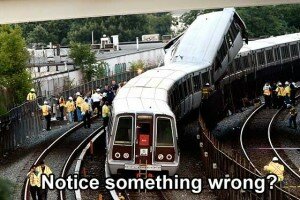 Seems like all of the out of towners and the people who visit DC once or twice a year have this strange idea that the Metro is efficient and a great example of public transportation that actually works. What?! How can people who take the Metro once or twice a year possibly make this call? Probably because they only take the Metro during nonpeak hours in the afternoon when everyone is at work, so it seems great. Hey, look there is a subway that can take me anywhere around the mall that I want to go—and there’s hardly anyone on it! (Yeah try and take an Orange Line train at 5:30.) Combine this with the fact that tourists don’t actually have any time constraints. They can show up wherever whenever they want to. I mean, the museums are pretty much open all day long and no tourist is getting up at six a.m. to go to the American History.